Digital vs Paper Wedding Cards: Which Should You Choose?
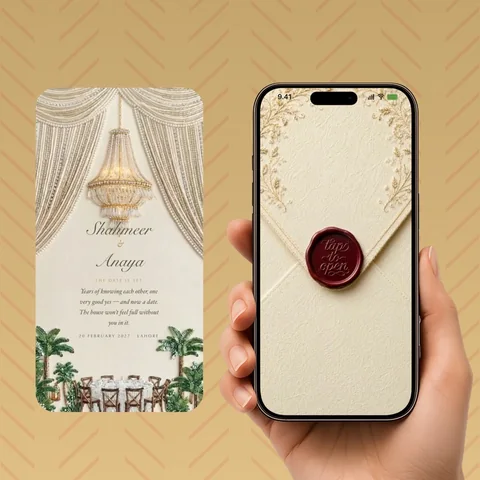
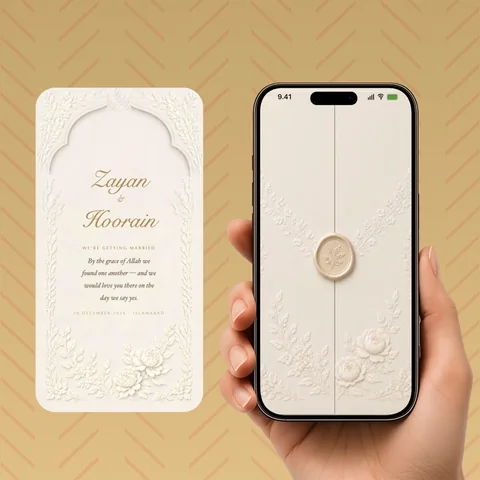
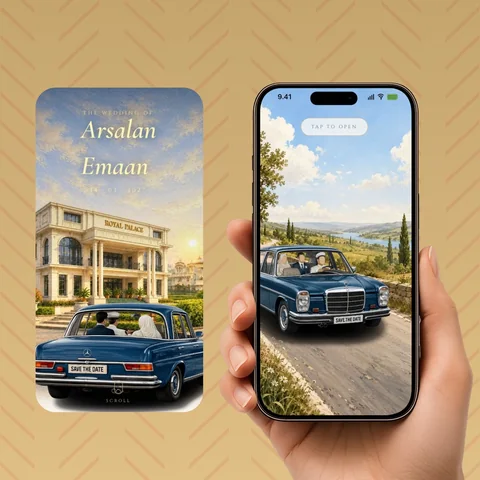
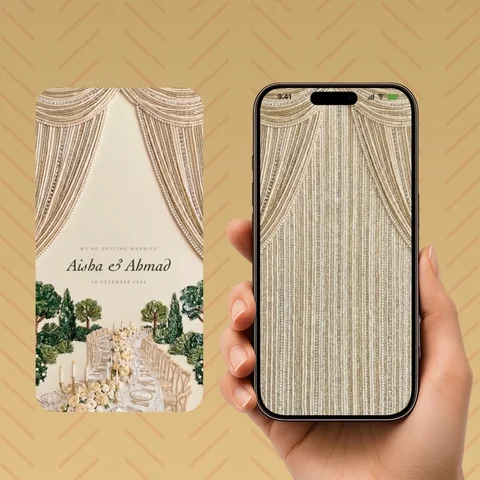
Digital wedding invitations reach the whole guest list instantly, carry every function in one link, can be corrected after they are sent, and let you count RSVPs. A printed card still matters for the most senior elders who expect one, and for the custom of delivering an invitation by hand to close family. Many Pakistani families now do both: a small number of printed cards for grandparents and senior relatives, and a digital invitation for everyone else, sent on WhatsApp.
What digital invitations do better
- Speed. A digital card can be ready to send within days of your details being confirmed. Print needs an approved design, then printing, then delivery.
- Every function in one place. The Mehndi, Baraat, Nikah and Walima each get their own date, time, venue, map and dress code inside one link, instead of one folded sheet trying to hold four functions, or four print runs.
- Two languages. English and Urdu in the same card, switched with a tap, instead of choosing one language to print.
- Changes after sending. If a venue or time changes, the card updates at the link everyone already has. No reprinting, no re-delivering.
- An RSVP that counts itself. Guests reply inside the invitation, and the family sees a count for each function instead of guessing from phone calls.
- No logistics. Nothing to collect, box or deliver across the city.
- More than a card can hold. Music, a countdown, a photo gallery, a story timeline and one-tap add-to-calendar.
Where paper still makes sense
- Grandparents and senior elders. For a generation that associates an invitation with a card placed in their hands, a link alone can feel like an omission. A few printed cards for them is a courtesy, not a contradiction.
- Delivering by hand. In many families, visiting close relatives with the card is itself the gesture of respect. The visit matters as much as the card.
- Guests who don't use smartphones comfortably. A few guests genuinely find a call and a printed card easier. Identify them by name rather than assuming by age.
- A keepsake. Some families simply want one physical card to keep.
The honest trade-offs
Neither format is strictly better; they solve different problems. A printed card is an object: it can be displayed, kept and handed over. But it can't be edited once printed, can't carry a map or an RSVP, and printing and delivering to a long guest list takes real time. A digital card can be edited, counts replies, reaches every city instantly and carries far more information, but it depends on the guest opening a link, and for a small number of guests that doesn't land the way a card in their hands does.
Cost is the other difference. A print run is priced per card, so the bill grows with the guest list and grows again if anything has to be reprinted. A digital invitation is one flat price for every guest and every function, with changes included. Prices vary widely, so compare real quotes for your own guest list rather than assuming either is always cheaper. For Niru's prices, see the wedding card price guide.
The hybrid approach
A common middle path is a small, deliberate print run for grandparents, the most senior relatives on both sides and anyone the family wants to visit in person, alongside a digital invitation for everyone else. The people who most expect a physical card get one, without printing and delivering hundreds of copies to a guest list that will open a link on their phone anyway.
If you do both, finalise the digital invitation first. Its wording, dates and venues become the single source of truth, and the small print run matches it, instead of the two being written separately and drifting apart.
Questions to ask before you decide
- How many guests genuinely need a physical card, and how many would be just as happy with a link?
- Who does the family want to visit and deliver a card to in person?
- How many functions are there, and how much does each one need to say: map, dress code, timings?
- Is any date or venue still likely to change? A digital card absorbs a late change far more easily.
See one before you decide
The easiest way to judge a digital invitation is to open one on your phone the way a guest would. Browse Niru's live designs, every one with a working demo, and read how to send wedding invitations on WhatsApp.